Learning how to keep farm records is essential for ensuring operational success and regulatory compliance. Proper record-keeping helps farmers monitor their activities, make informed decisions, and plan for future growth. Whether you manage a small family farm or a large commercial operation, maintaining accurate and organized data is crucial for sustainable development and legal adherence.
This guide explores various methods for recording farm data, the types of records to maintain, and best practices to safeguard your information. By understanding these key aspects, farmers can streamline their processes, enhance productivity, and ensure their farm remains compliant with relevant laws and regulations.
Importance of Keeping Farm Records
Maintaining comprehensive farm records is fundamental to the success and sustainability of agricultural operations. These records serve as essential tools that facilitate effective management, ensure legal compliance, and support strategic planning. Accurate documentation not only helps in tracking the farm’s performance but also provides valuable insights for future growth and development.
Proper record-keeping encompasses various aspects of farm management, including financial transactions, crop and livestock data, resource usage, and compliance documentation. When kept diligently, these records enable farmers to monitor operational efficiency, evaluate productivity, and identify areas for improvement. Furthermore, they provide necessary evidence during audits, tax assessments, and legal procedures, safeguarding the farm from potential disputes or penalties. Overall, well-maintained records form the backbone of a resilient and forward-looking farming enterprise, empowering farmers to make informed decisions that enhance profitability and sustainability.
Key Information to Record Regularly
To ensure effective management, farmers should consistently document critical data related to their operations. This information helps in evaluating the farm’s performance over time and facilitates timely decision-making.
- Financial Transactions: Record all income sources such as crop sales, livestock sales, government subsidies, and grants. Document expenses including seeds, fertilizers, labor, equipment purchases, and maintenance costs.
- Crop and Livestock Data: Maintain detailed records of planting and harvesting dates, crop varieties, yield quantities, livestock births, health treatments, vaccinations, and mortality rates.
- Resource Usage: Track the consumption of water, fertilizers, pesticides, and energy. This data helps in optimizing resource allocation and reducing costs.
- Legal and Compliance Documentation: Keep copies of permits, licenses, insurance papers, and inspection reports to ensure adherence to local regulations.
- Labor and Workforce Records: Document work hours, wages, and employment contracts of farm workers to maintain transparency and facilitate payroll management.
Supporting Decision-Making and Farm Growth
Accurate and organized records serve as a vital foundation for strategic decision-making and long-term farm development. They provide a clear picture of operational trends, financial health, and resource efficiency, enabling farmers to identify successful practices and areas needing improvement.
For instance, analyzing crop yield data over several seasons can reveal which varieties perform best under specific weather conditions, guiding future planting decisions. Similarly, detailed financial records help in budgeting, securing loans, and planning investments for expansion or modernization.
Proper record-keeping also enhances the ability to forecast future performance, assess the impact of new technologies or practices, and evaluate market trends. This data-driven approach fosters continuous improvement, increases productivity, and ultimately supports sustainable farm growth. Additionally, detailed records bolster credibility with stakeholders, lenders, and regulatory agencies, facilitating access to resources and opportunities that can drive the farm’s advancement.
Types of Farm Records to Maintain

Maintaining comprehensive and accurate farm records is essential for effective farm management, compliance with regulations, and maximizing profitability. Different types of records serve various purposes, from tracking production to ensuring legal compliance. Proper organization of these records enables farmers to make informed decisions, prepare for audits, and access financial support programs efficiently.The following overview highlights the key categories of farm records that should be systematically maintained.
These records include crop yields, livestock inventories, financial transactions, and equipment maintenance logs, among others. Including records related to regulations, taxes, and subsidies is particularly important, as they can significantly impact farm operations and financial planning.
Essential Farm Records
To ensure proper record-keeping, farmers should focus on maintaining the following vital records, each serving specific functions in farm management and compliance. Keeping these records updated and accessible helps streamline operations and facilitates accurate reporting to authorities, financial institutions, and support agencies.
| Record Type | Description | Frequency | Responsible Person |
|---|---|---|---|
| Crop Yields | Records of total harvest quantities per crop, including quality and moisture content, to assess productivity and guide future planting decisions. | After each harvest season | Farm Manager / Crop Supervisor |
| Livestock Inventories | Details of animals including species, number, age, health status, and breeding records, essential for herd management and health monitoring. | Monthly or quarterly | Livestock Manager / Farm Supervisor |
| Financial Transactions | Records of income, expenses, sales, purchases, loans, and subsidies received, facilitating financial analysis and tax reporting. | Ongoing, with monthly reviews | Farm Bookkeeper / Farm Manager |
| Equipment Maintenance | Logs of maintenance, repairs, and servicing of machinery and tools to ensure operational efficiency and longevity of assets. | As performed or monthly | Equipment Manager / Farm Mechanic |
| Regulatory Compliance Records | Documents related to pesticide application, environmental regulations, water usage permits, and other legal requirements. | As required by specific regulation | Farm Compliance Officer / Farm Manager |
| Tax Records and Subsidy Documentation | Receipts, invoices, and documentation supporting claims for subsidies, tax deductions, or credit applications. | Annually or as needed during filing | Tax Consultant / Farm Accountant |
Having these records well-organized in a structured manner provides clarity and facilitates quick retrieval during audits, financial analysis, or application processes for government support. Ensuring responsibility is clearly assigned to specific individuals promotes accountability and consistency in record maintenance.
Methods for Recording Farm Data
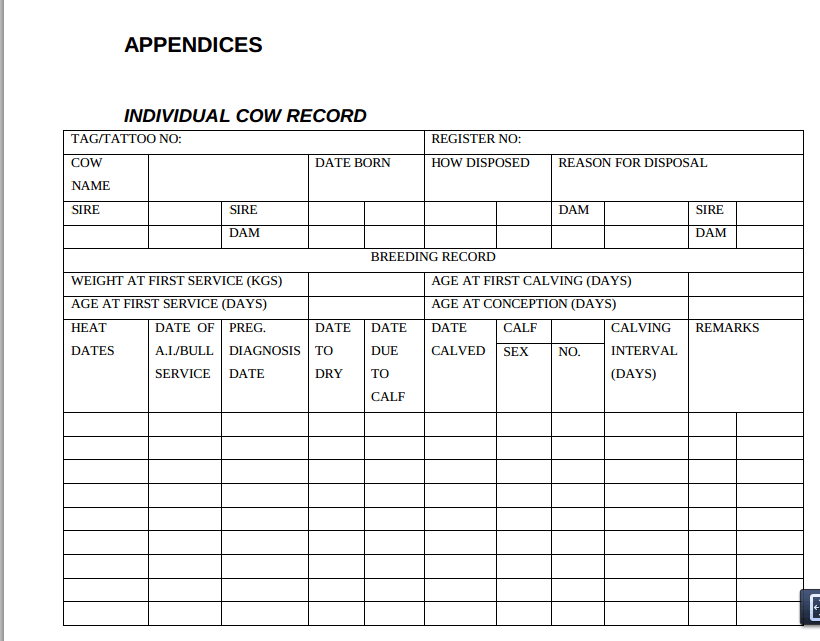
Maintaining accurate and comprehensive farm records is essential for effective farm management, decision-making, and compliance with regulations. With advancements in technology and traditional methods, farmers have a variety of options for recording their farm data. Choosing the right method depends on the farm size, available resources, and personal preferences. This section explores both manual and digital record-keeping techniques, comparing their advantages and limitations, and provides examples of user-friendly tools suitable for farms of different scales.
Manual Record-Keeping Techniques
Manual record-keeping remains a popular choice among farmers who prefer simplicity or have limited access to digital tools. These methods involve the use of physical materials to document farm activities and data, providing a tangible and straightforward approach to keeping records.Manual record-keeping techniques include using notebooks, binders, or printed forms, which allow farmers to record daily activities, expenses, crop yields, livestock health, and other relevant information.
Farmers can organize these records by date, activity type, or farm section, making it easier to review and analyze data periodically.Notebooks are portable and require no technical skills, making them accessible for all farmers. Binders with pre-printed forms or templates can streamline data entry and improve consistency. Printed forms designed for specific record types—such as feed logs, medication schedules, or harvest reports—can further standardize record-keeping practices.Advantages of manual methods include simplicity, low-cost implementation, and independence from technology, which can be beneficial in areas with limited internet connectivity.
However, manual records are vulnerable to physical damage, loss, and can be time-consuming to update and analyze, especially as data volume increases.
Digital Record-Keeping Options
Digital record-keeping offers enhanced efficiency, accuracy, and ease of data analysis. With the proliferation of affordable technology, farmers of all sizes are increasingly adopting electronic methods to streamline farm data management.Digital options encompass spreadsheet software, specialized farm management software, and mobile applications. Spreadsheets like Microsoft Excel or Google Sheets provide customizable templates for tracking various farm activities, from crop planting schedules to livestock health records.
They are accessible and familiar to many users, allowing for easy data entry, sorting, and basic analysis.Farm management software is designed specifically for agricultural operations, offering features such as inventory tracking, financial management, crop rotation planning, and real-time monitoring. Examples include FarmLogs, AgriWebb, and Cropio, which often come with user-friendly interfaces and cloud-based storage, enabling farmers to access data from multiple devices.Mobile apps tailored for farmers, such as FieldView or AgroStar, facilitate on-the-go data entry, weather updates, and decision support.
These apps often include features like barcode scanning for livestock identification, GPS tracking for field mapping, and automatic data synchronization.Advantages of digital methods include improved data accuracy, ease of updating and retrieving records, and the ability to perform detailed analyses and generate reports. Additionally, digital records can be backed up securely, reducing the risk of data loss. Limitations include the need for reliable electricity or internet access, initial setup costs, and the requirement for basic digital literacy.
Comparison of Physical and Electronic Records
Both physical and electronic records have unique benefits and challenges that influence their suitability depending on farm circumstances.Physical record-keeping, such as notebooks and printed forms, is straightforward, cost-effective, and does not depend on technology. It is particularly advantageous in remote areas with limited internet access or for farmers who are less comfortable using digital tools. However, physical records are susceptible to damage from water, fire, or pests and can become cumbersome as the volume of data grows, making retrieval and analysis more difficult.Electronic records, on the other hand, offer advantages in data organization, searching, and analysis.
They facilitate quick updates, sharing among farm staff, and integration with other digital tools like financial software or weather services. Despite these benefits, electronic records require a certain level of digital literacy, reliable power sources, and cybersecurity measures to prevent data loss or theft.Choosing between these methods often involves considering the farm size, budget, available infrastructure, and the farmer’s comfort with technology.
Examples of User-Friendly Digital Templates and Tools
For farms of different sizes and operational complexities, several digital templates and tools are designed to be user-friendly and accessible.Small-scale farmers can utilize free or low-cost spreadsheet templates available on agricultural extension websites or platforms like Google Sheets. These templates often include pre-formatted sheets for crop planting schedules, expense tracking, and harvest records, requiring minimal setup.Mid-sized farms may benefit from dedicated farm management software such as FarmLogs or AgriWebb, which provide intuitive interfaces, mobile compatibility, and integrated features like weather tracking and financial management.
Many of these platforms offer trial periods or scaled plans suitable for various farm sizes.Large commercial farms often require comprehensive systems that integrate data across multiple operations. In such cases, customized solutions or enterprise-level software like Cropio or Agro-op may be appropriate, offering advanced features, data analytics, and scalability.Numerous digital tools also provide customizable templates—both free and paid—that allow farmers to design record sheets tailored to their specific needs, such as livestock health logs, fertilizer application records, or equipment maintenance schedules.
These tools simplify the transition from manual to digital record-keeping and enhance overall farm data management.
Procedures for Maintaining Accurate Records

Maintaining accurate farm records is essential for effective farm management, ensuring compliance with regulations, and making informed decisions about the farm’s operations. Establishing clear procedures for data entry and management helps to enhance consistency, reduce errors, and facilitate easy retrieval of information when needed.
Implementing structured routines for daily, weekly, and monthly record-keeping ensures that the data remains current and reliable. Proper procedures encompass the collection, verification, and backup of records, emphasizing the importance of discipline and regularity in record maintenance. Following these guidelines helps to prevent discrepancies, identify issues early, and improve overall farm productivity.
Daily Data Entry Routines
Daily routines form the backbone of accurate record-keeping, capturing real-time data essential for day-to-day farm management. Consistency in daily data entry ensures that information remains accurate and up-to-date, providing a reliable basis for decision-making and operational adjustments.
- Data Collection: Gather daily data on activities such as feed and water intake, animal health observations, weather conditions, and labor hours. Use standardized forms or digital apps to streamline the process.
- Data Verification: Review the collected data for completeness and accuracy at the end of each day. Cross-check with physical records or digital inputs to identify and correct any errors immediately.
- Data Entry: Enter the verified data into the farm management system or record book promptly. Ensure that entries are clear, legible, and correctly categorized.
- Backup: Save or back up the data daily onto a secure medium or cloud storage to prevent loss due to technical failures or accidental deletions.
Weekly Data Entry Routines
Weekly routines help in consolidating daily data, providing a broader overview of farm performance and enabling timely analysis. These routines facilitate early detection of trends or issues that require attention before they escalate.
- Data Consolidation: Review daily records, compile weekly summaries on feed consumption, veterinary treatments, labor hours, and sales.
- Verification and Reconciliation: Cross-check weekly summaries with daily entries to ensure consistency and accuracy. Address any discrepancies immediately.
- Updating Records: Input the weekly summaries into the farm management system, ensuring all data is correctly categorized and dated.
- Backup and Storage: Save weekly data backups on separate storage devices or cloud platforms, maintaining organized and secure records.
Monthly Data Entry Routines
Monthly routines are vital for comprehensive farm evaluations, financial assessments, and planning. They involve reviewing the accumulated data from previous weeks to generate reports and identify long-term trends. Accurate monthly records support strategic decision-making and resource allocation.
- Data Review: Analyze weekly summaries, focusing on production levels, income and expenses, and livestock health. Look for patterns or anomalies requiring intervention.
- Record Verification and Corrections: Conduct a detailed review of all entries for accuracy. Make necessary corrections and document any adjustments made.
- Report Generation: Prepare monthly reports summarizing farm activities, financial status, and productivity metrics. Use these reports for management reviews and planning.
- Data Backup and Archiving: Store the month’s records in secure digital archives, maintaining organized folders for ease of access and future reference.
Guidelines for Reviewing and Correcting Records
Periodic review of farm records is crucial for maintaining data integrity. Regular audits help identify errors, omissions, or inconsistencies, allowing timely correction and ensuring the accuracy of the farm’s data repository.
- Scheduled Reviews: Conduct reviews at least once a month, aligning with the monthly data entry routine, to ensure ongoing accuracy.
- Cross-Verification: Compare records with physical evidence such as receipts, inventory logs, and animal health reports to verify correctness.
- Corrective Actions: Update or amend records as needed, clearly noting the date and reason for corrections to maintain transparency.
- Documentation: Keep a log of review activities, discrepancies found, and actions taken. This documentation aids in future audits and improves record-keeping practices.
Consistency and timeliness in updating records are fundamental for credible and functional farm management systems. Regular reviews and prompt corrections prevent errors from compounding and ensure the farm operates on reliable data.
Legal and Financial Considerations
Maintaining comprehensive farm records is crucial not only for operational efficiency but also for ensuring legal compliance and financial integrity. Proper documentation assists farmers in fulfilling taxation obligations, preparing for audits, and complying with relevant laws. It also plays a vital role in establishing eligibility for insurance claims and government subsidies, which can significantly impact the farm’s sustainability and growth.
Well-organized records serve as a foundation for transparent financial management and legal accountability, helping farmers make informed decisions and avoid potential penalties.
Farms are subject to various legal and financial regulations depending on regional laws and industry standards. Accurate record-keeping ensures that farmers can substantiate income, expenses, and other financial transactions when required by authorities. Additionally, thorough documentation simplifies the process of financial reporting, auditing, and legal verification, reducing the risk of discrepancies and disputes. Proper records also facilitate timely access to financial support programs and insurance benefits, safeguarding the farm against unforeseen challenges.
Documentation for Tax Filings, Audits, and Legal Compliance
Ensuring compliance with tax laws, audit requirements, and legal mandates requires maintaining detailed and accurate records. These documents provide proof of income, expenses, asset ownership, and other financial activities. In the case of audits, comprehensive records help verify the accuracy of submitted tax returns and demonstrate adherence to legal standards.
Farmers must keep records such as sales receipts, expense invoices, payroll documentation, and asset purchase agreements. These documents substantiate the figures reported in tax filings and are vital during official audits. Failure to maintain proper documentation can lead to penalties, fines, or legal complications, emphasizing the importance of diligent record-keeping.
Documentation Needed for Insurance Claims and Farm Subsidies
Insurance claims and subsidy applications require specific documentation to validate eligibility and support claims. Proper records streamline the process and increase the likelihood of successful claims, minimizing delays and financial loss.
Common documents include photos of damaged assets, repair receipts, inventory records, crop yield reports, and proof of ownership or lease agreements. For subsidies, farmers often need to provide production records, financial statements, land titles, and proof of compliance with program requirements. Maintaining organized and detailed records ensures swift processing and accurate validation of claims and applications.
Summary of Necessary Records for Legal and Financial Purposes
| Document Type | Purpose | Retention Period |
|---|---|---|
| Sales Receipts and Invoices | Proof of income and sales transactions | 5 years |
| Expense Invoices and Payment Records | Justification for deductions and expenses | 5 years |
| Bank Statements and Financial Statements | Financial reconciliation and audit evidence | 7 years |
| Land Titles and Lease Agreements | Legal ownership and land use verification | As long as the document remains valid |
| Insurance Policies and Claims Documents | Claim processing and proof of coverage | 10 years after policy termination |
| Crop and Production Records | Support for subsidy and insurance claims | 5 years |
Organized and comprehensive record-keeping simplifies reporting processes by providing quick access to accurate data. When records are systematically maintained, farmers can generate financial reports efficiently, prepare for tax submissions with confidence, and respond rapidly to any legal inquiries or audits. Clear documentation reduces the risk of errors and helps maintain transparency, fostering trust with financial institutions, government agencies, and legal entities.
Best practices for record security and backup
Proper safeguarding of farm records is essential to protect sensitive information from theft, loss, or damage. Implementing effective security measures ensures the integrity and confidentiality of farm data, which is vital for operational continuity, legal compliance, and financial management. By adopting comprehensive security and backup strategies, farmers can mitigate risks associated with data breaches, accidental loss, or hardware failures, thereby maintaining trustworthy records for sustainable farm management.Maintaining farm records involves handling a variety of data types, including financial transactions, crop and livestock information, employee details, and legal documents.
Ensuring this data remains secure requires a balanced approach that combines physical security measures with robust digital protections. Regular backups safeguard against unforeseen events such as natural disasters, cyberattacks, or hardware malfunctions, ensuring data recovery and business continuity.
Strategies for safeguarding sensitive farm data
Effective security begins with physical and digital measures tailored to the nature of the farm’s operations. Physical measures include securing office areas with locked cabinets or safes for printed documents and restricting access to sensitive hardware, such as servers or computers containing farm data. Installing surveillance cameras and alarm systems can deter theft or unauthorized access.Digital security involves protecting data stored on computers, servers, or cloud platforms through encryption and strong access controls.
Data encryption ensures that even if data is intercepted or accessed unlawfully, it remains unreadable without the proper decryption keys. Implementing firewalls, antivirus software, and regular security updates further fortify digital defenses against malware or cyber intrusions.
Procedures for regular data backups
Consistent data backups are fundamental in preserving farm records against data loss incidents. Establishing a routine schedule for backing up ensures that the most recent data is always secure. Backups should be stored in multiple locations to prevent simultaneous loss; these include external drives and cloud storage services.Schedule daily or weekly backups depending on the volume of data generated, and verify the success of each backup process.
Automating backups with scheduled tasks reduces the risk of human error and ensures consistency. Regularly test backup files by restoring some data to confirm their integrity and usability in case of emergencies.
Recommended security tools and backup schedules
Utilizing specialized security tools enhances the protection of farm data. Recommended tools include:
- Antivirus and anti-malware software such as Norton, McAfee, or Bitdefender
- Firewall solutions tailored for small businesses or farm operations
- Encryption software like VeraCrypt or BitLocker for securing sensitive files
- Password managers such as LastPass or Dashlane to generate and store complex passwords
- Secure cloud storage providers like Google Drive, Dropbox, or OneDrive with proper permissions
A recommended backup schedule might involve:
- Daily automatic backups of critical data to external drives
- Weekly backups to a secure cloud service, with encryption enabled
- Monthly comprehensive backups combining physical and digital copies stored at off-site locations
- Annual review and testing of backup systems to ensure readiness for data recovery
Importance of access control and user permissions
Controlling who can access farm records is crucial to prevent unauthorized alterations or disclosures. Implementing an access control system ensures that only authorized personnel can view or modify sensitive data. User permissions should be assigned based on roles, with minimal privileges granted to reduce security risks.Creating a user access hierarchy allows farm managers to define specific levels of permission, such as read-only access for casual staff or full editing rights for administrators.
Regularly reviewing and updating access rights is vital, especially when staff roles change or personnel leave. Employing multi-factor authentication adds an extra layer of security, verifying user identity beyond simple passwords.
Training and staff involvement
Effective record-keeping in farming operations relies heavily on the active participation and competence of farm personnel. Proper training ensures that staff members understand the importance of accurate data entry, follow standardized procedures, and recognize their role in the farm’s overall management. Engaging staff in record-keeping not only enhances data quality but also promotes a culture of accountability and continuous improvement within the farm environment.By investing in targeted training initiatives and fostering staff involvement, farm managers can significantly improve the consistency and reliability of farm records.
Well-trained staff members are more likely to recognize discrepancies, adhere to procedures, and contribute to the farm’s operational success through diligent data management.
Training farm personnel on record-keeping procedures
Providing comprehensive training sessions tailored to different staff roles is essential for uniform understanding and implementation of record-keeping practices. Training should cover the purpose of records, specific types of farm data to be recorded, and the correct methods for data entry and maintenance. For example, staff involved in livestock management need to understand how to record health treatments, breeding information, and feed schedules accurately.Training sessions should include practical demonstrations, hands-on exercises, and real-life scenarios to reinforce learning.
Regular refresher courses can help maintain high standards, especially when farm operations evolve or new staff are hired. Encouraging an open environment where staff can ask questions and seek clarifications enhances their confidence and skills in record management.
Creating user manuals and checklists
Clear, concise, and accessible documentation serves as an essential reference for staff engaged in record-keeping. User manuals should Artikel step-by-step procedures, responsibilities, and best practices tailored to the farm’s specific record-keeping systems. Visual aids, such as sample forms or flowcharts, can simplify complex processes and improve comprehension.Checklists are valuable tools that help staff verify that all necessary data has been captured correctly at each recording point.
For instance, a daily livestock health checklist might include sections for temperature recording, medication administration, and observation notes. These checklists promote completeness and consistency, reducing the likelihood of missing or erroneous data.
Motivating staff to maintain accurate records consistently
Fostering a positive attitude towards record-keeping requires recognition, accountability, and incentives. Recognizing staff members who consistently produce accurate and timely records reinforces the importance of their role. Establishing performance metrics related to record accuracy and completeness can motivate staff to adhere to standards.Creating a sense of ownership and responsibility can be achieved by involving staff in developing record-keeping procedures or setting collective goals.
Providing feedback sessions where records are reviewed and praised for accuracy encourages ongoing diligence. Incentives such as acknowledgment, small rewards, or professional development opportunities can further motivate staff to maintain high standards in data management.
Organizing a sample training or schedule for new and existing staff
Implementing a structured training schedule ensures that both new hires and existing personnel stay updated on record-keeping practices. An example schedule could include an initial intensive training session during onboarding, focusing on fundamental procedures, followed by periodic refresher courses. For example:
- Week 1: Orientation and basic record-keeping training for new staff, covering farm records overview, forms, and procedures.
- Month 1: Hands-on practice with supervision, feedback, and clarification sessions.
- Quarterly: Refresher courses addressing updates in procedures, new record forms, or technology tools.
- Ongoing: Monthly team meetings to review records, discuss challenges, and share best practices.
Incorporating mentorship programs, where experienced staff guide newer employees, also helps reinforce best practices. Regular assessments and feedback sessions ensure continuous improvement and foster a proactive approach to record management among all team members.
Examples of Farm Record-Keeping Systems

Effective farm management relies heavily on structured record-keeping systems tailored to the size and complexity of the operation. The choice of a system influences how well data is organized, accessed, and utilized to support decision-making. Small farms often benefit from simple, manual methods, while medium and large farms require more comprehensive and integrated solutions. Understanding the different frameworks available helps farmers select the most suitable system to enhance productivity, ensure compliance, and facilitate growth.Different farm record-keeping systems vary in complexity, cost, and functionality.
Each has unique advantages and limitations that influence their suitability for farms of various scales. Below are some commonly used frameworks, organized according to farm size, along with their characteristics and practical considerations.
Manual Record-Keeping Systems for Small Farms
Small farms often operate with limited resources and personnel, making manual record-keeping a practical choice. These systems typically involve physical logs, notebooks, or printed forms to track daily activities, expenses, and production data.
- Paper-Based Journals and Ledgers: Simple notebooks or pre-printed ledgers used to record transactions, crop planting dates, harvests, and expenses.
- Pros: Low initial cost, easy to set up, minimal technical knowledge required.
- Cons: Time-consuming, prone to human error, difficult to analyze large datasets, risk of loss or damage.
Spreadsheet-Based Systems for Small to Medium Farms
Spreadsheets offer a flexible and affordable technology solution that elevates manual record-keeping by enabling better organization and data analysis. Widely used software like Microsoft Excel or Google Sheets provides customizable templates suited for farm data management.
- Custom Templates in Spreadsheets: Templates for crop rotation schedules, financial tracking, inventory management, and labor records.
- Pros: Cost-effective, easy to modify, supports basic data analysis and graphing, accessible on multiple devices.
- Cons: Limited automation, requires basic computer skills, potential for data inconsistency if not properly maintained.
Integrated Farm Management Software for Medium to Large Farms
As farm operations expand, specialized farm management software provides a comprehensive, automated approach to record-keeping. These systems often include modules for crop planning, livestock management, financial accounting, and inventory control, often integrated with GPS and IoT devices.
- Examples include FarmLogs, AgriWebb, and Trimble Farm Management: Cloud-based platforms offering real-time data access, mobile apps, and reporting tools.
- Pros: Automates data collection, improves accuracy, enhances decision-making, scalable to farm size.
- Cons: Higher initial investment, requires training, dependence on internet connectivity, potential data security concerns.
Sample Case Study: Small Organic Farm Using Manual and Spreadsheet Systems
A small organic farm with 10 acres uses a combination of handwritten logs for daily activities and a tailored spreadsheet for financial and crop rotation data. The farmer maintains a physical diary to record planting and harvesting schedules weekly, while a spreadsheet tracks expenses, income, and pest management efforts monthly. This hybrid approach allows for straightforward record-keeping and analysis without significant technological investment, supporting organic certification requirements and efficient resource use.
Integration with Existing Operations
Effective record-keeping systems should seamlessly integrate with ongoing farm activities. Manual logs should be maintained consistently alongside operational routines, while digital systems can sync with field equipment, sensors, and other farm management tools. Compatibility with existing software and hardware ensures data flows smoothly, reducing duplication and minimizing errors. When transitioning to advanced systems, training staff and gradually phasing in new tools enhance adoption and maximize the benefits of integrated data management.
Final Wrap-Up
In conclusion, mastering how to keep farm records is a fundamental aspect of successful farm management. Implementing effective procedures, utilizing the right tools, and maintaining organized data not only simplifies legal and financial processes but also empowers farmers to make strategic decisions that foster growth and sustainability. Embracing diligent record-keeping is an investment in the future stability and prosperity of your farm.